






Pool Service Naples & SWFL: Complete 2026 Maintenance Guide — What Top Pool Companies Actually Do
Southwest Florida pools face conditions that break every national guideline. Intense UV radiation, daily evaporation rates of nearly an inch, frequent heavy thunderstorms, naturally soft municipal water, and relentless salt-air corrosion create a chemistry and equipment environment that weekend checklists simply cannot handle. The pool companies in South Florida and the elite pool service Naples teams that maintain consistently clear water run different numbers, different schedules, and different equipment protocols than the rest of the country.
This comprehensive guide delivers the exact ranges, arithmetic, inspection habits, and preventive strategies used by professional technicians across Estero, Naples, Fort Myers, Bonita Springs, and Cape Coral in 2026. Whether you own a residential pool in Pelican Bay or a vacation rental in North Naples, these insights will help you achieve fewer emergencies, dramatically lower long-term chemical and repair costs, and equipment that survives the punishing Florida heat and humidity.
Image Grid 1





SWFL-Specific Water Chemistry: The Numbers That Matter in 2026
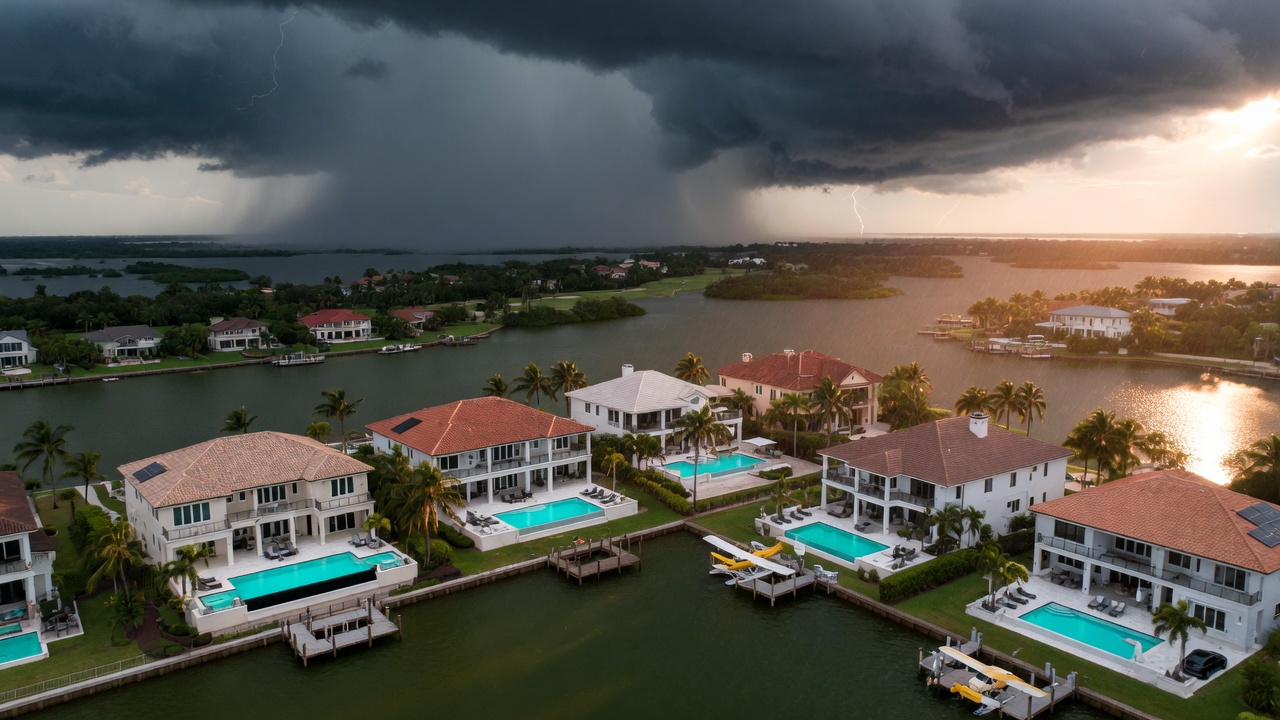
National “ideal” ranges were developed for moderate sun exposure and predictable rainfall. In Lee and Collier Counties the UV index regularly exceeds 10, a single afternoon storm can dilute a 15,000-gallon pool by 10–15 %, and source water is naturally soft with low calcium and alkalinity. These realities demand adjusted targets that most weekend warriors never consider.
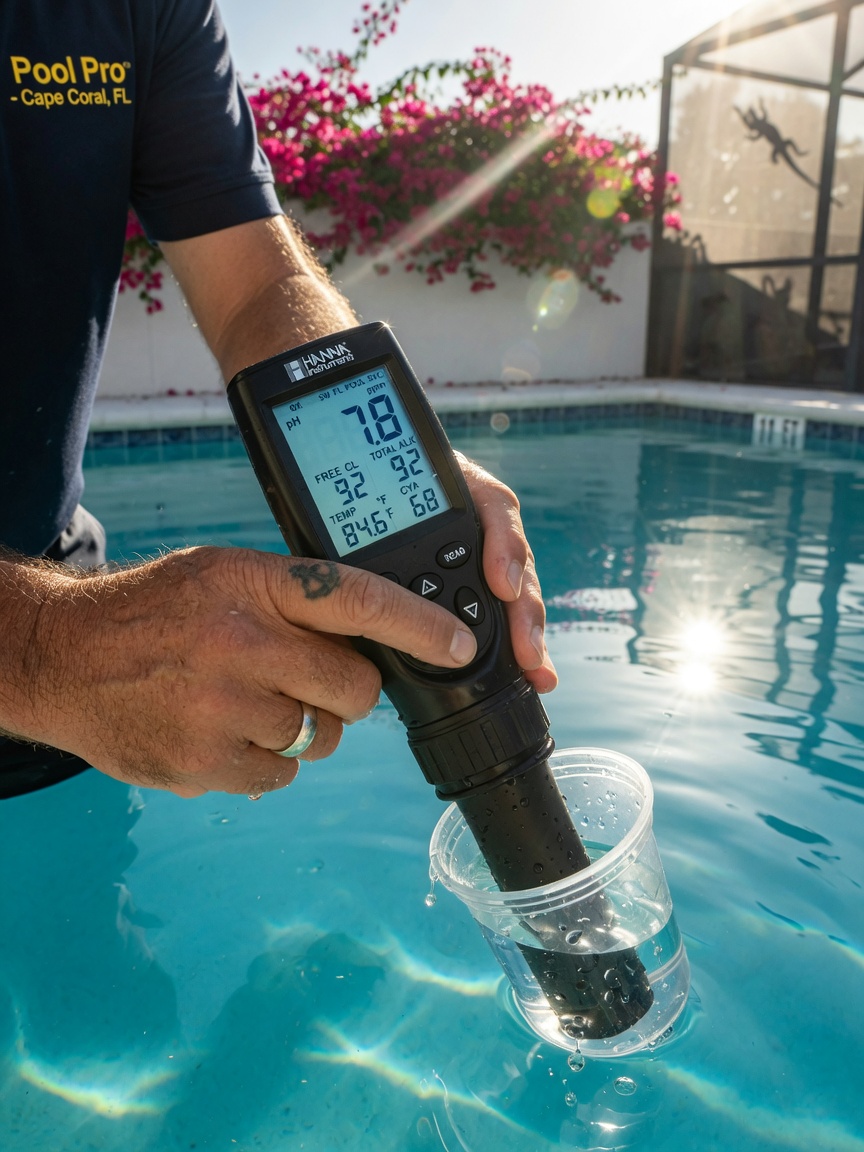
Working Targets Used by Top Pool Service Naples and Fort Myers Routes
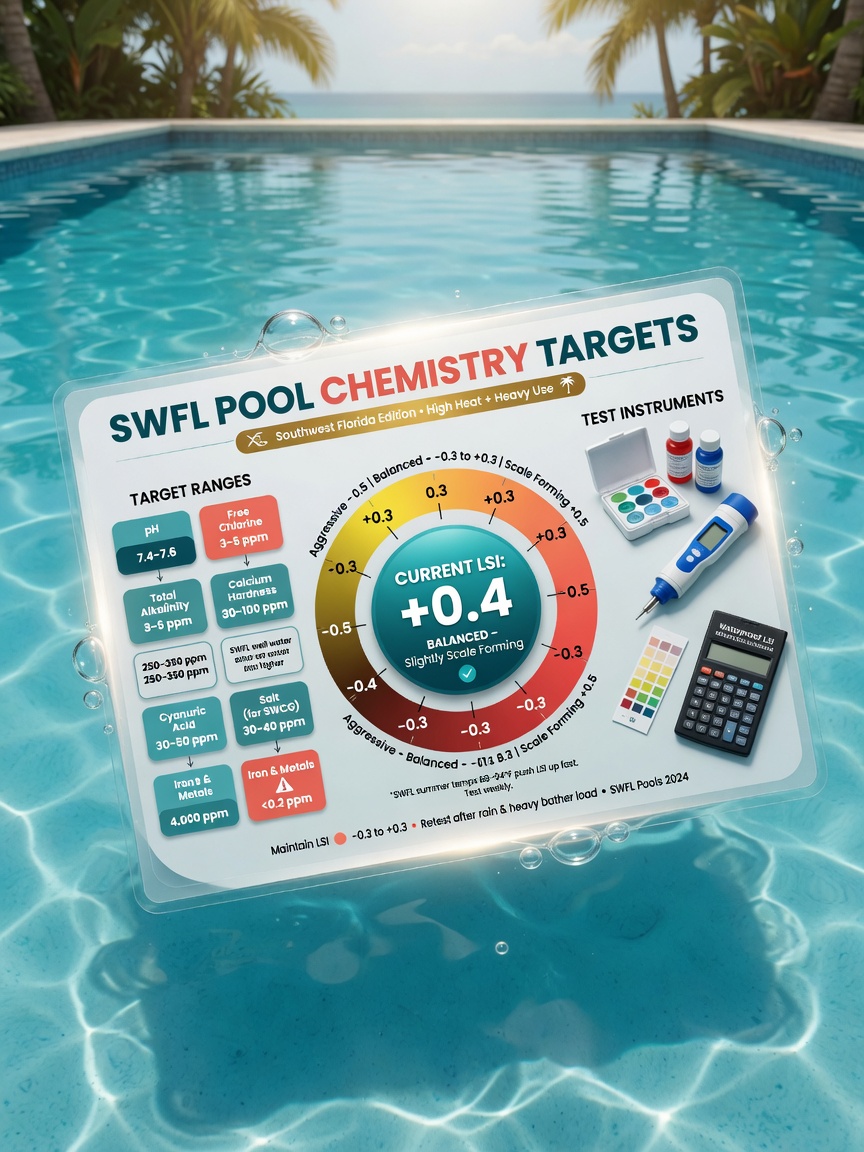
- Free Chlorine: 3–5 ppm during peak summer months (UV destroys residual at an accelerated rate)
- Cyanuric Acid (CYA): 40–60 ppm on traditional chlorine systems; 60–80 ppm on salt systems
- Total Alkalinity: 80–100 ppm to buffer pH swings after heavy rain dilution
- Calcium Hardness: 200–350 ppm (adjusted upward from soft Florida fill water)
- pH: 7.4–7.6 (tight range prevents etching and scaling)
- Phosphates: Keep under 100–200 ppb to starve algae
- TDS (Total Dissolved Solids): Track monthly; partial drains required more frequently than in other climates
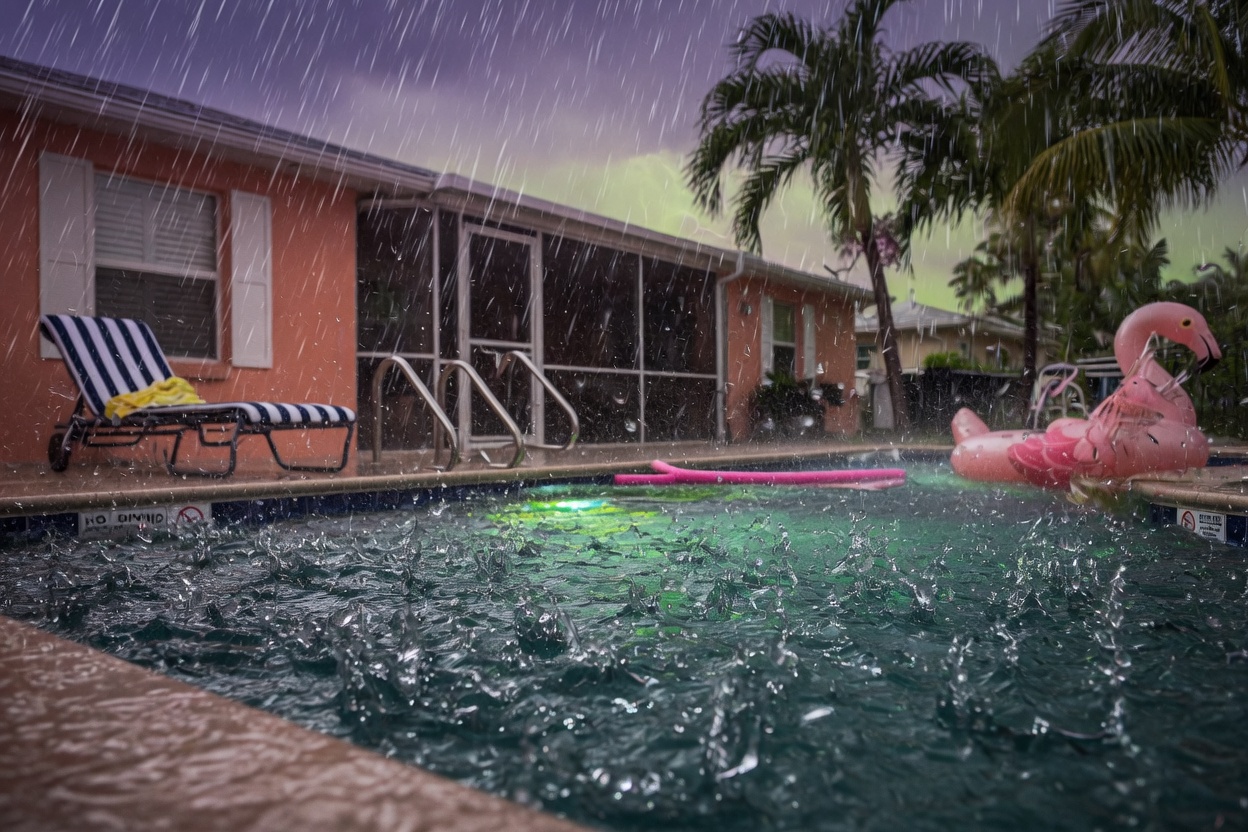
High UV intensity burns free chlorine faster than most owners expect. Trichlor tablets continuously add cyanuric acid. Heavy rain simultaneously lowers chlorine residual and alkalinity, creating perfect conditions for algae within 48 hours. Salt air accelerates corrosion on every metal component. The most successful pool service companies in Cape Coral and Naples never ignore these local factors.
Cyanuric Acid Creep — The Quiet Cost Driver in Southwest Florida
A typical SWFL pool using trichlor tabs can accumulate 10–20 ppm of cyanuric acid per month during peak season. Once CYA exceeds 80–100 ppm, free chlorine loses effectiveness even when test strips appear acceptable. This phenomenon, known as “chlorine lock,” leads to persistent algae issues and emergency service calls.
Image Grid 2




Practical arithmetic for a 15,000-gallon pool: each 3-inch trichlor tablet contributes roughly 10–12 ppm CYA over its dissolution life. Running three tablets per week for four weeks without dilution can raise cyanuric acid by 30–40 ppm. After a heavy rainy season, the only reliable correction is a controlled partial drain-and-refill. Professional pool service Naples technicians track this number on every visit; most DIY owners discover the problem only after the pool has turned green.
Post-Storm Protocol Used by Professional Technicians
- Test water within 24 hours after rain ends.
- Correct pH and total alkalinity first to stabilize the water.
- Shock to 10–15 ppm free chlorine (higher if phosphates are elevated).
- Address phosphates if readings exceed 200 ppb.
- Re-test 24 hours later and fine-tune all parameters.
This disciplined sequence prevents the majority of post-rain algae blooms that generate expensive emergency service calls throughout Lee and Collier counties.
Langelier Saturation Index for Soft Florida Water
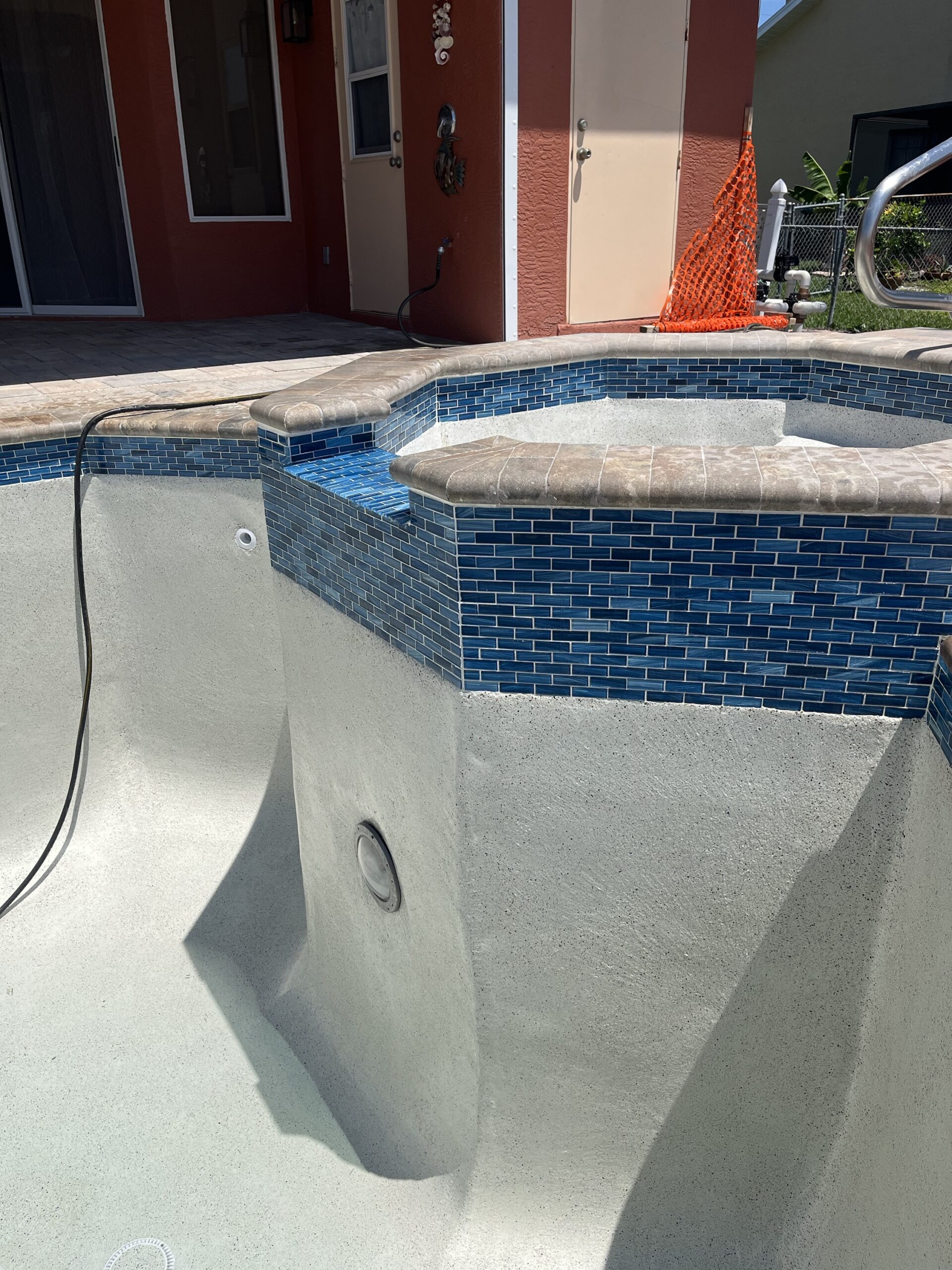
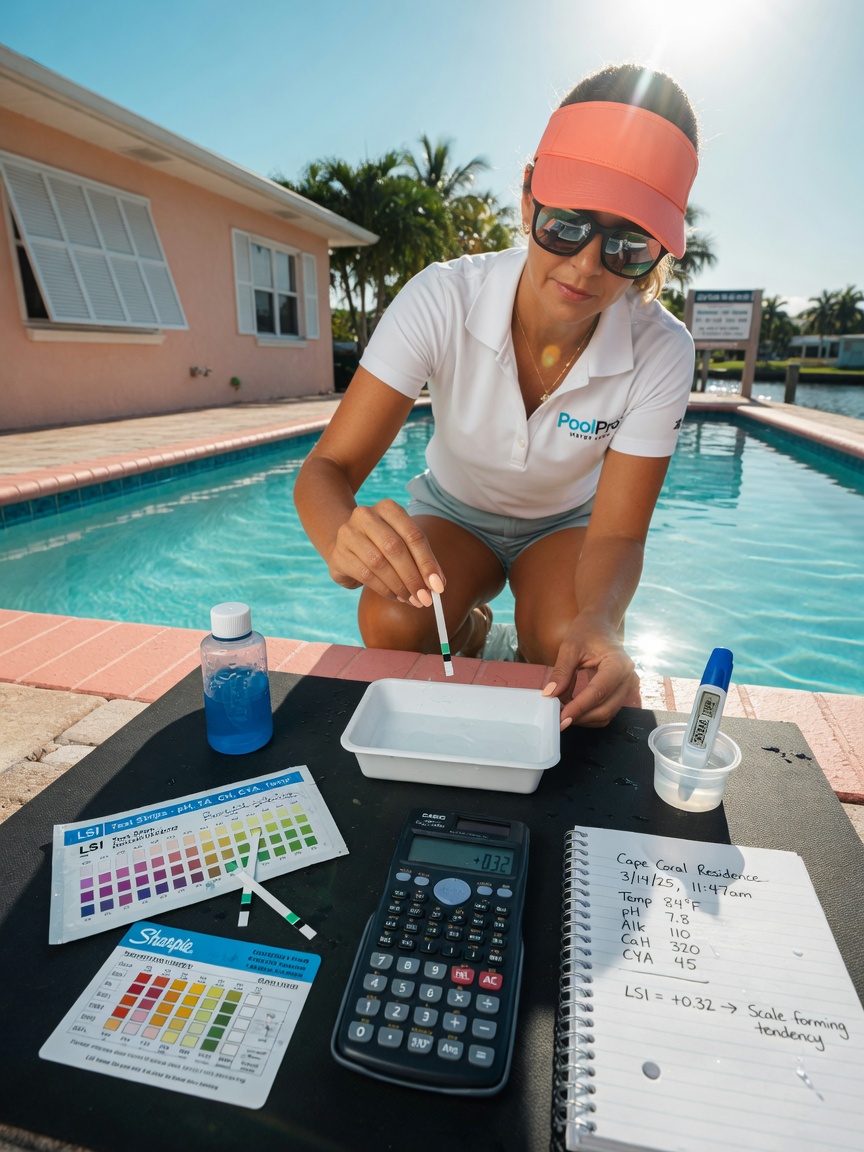
Soft municipal water starts with low calcium hardness. Maintaining a slightly positive Langelier Saturation Index (LSI) between 0.0 and +0.3 protects plaster, tile, and equipment without causing scale. Most homeowners never calculate LSI. Every reputable pool service Naples and Fort Myers route includes a quick LSI check on every visit because it prevents etching, surface degradation, and costly repairs that can exceed $8,000.
Equipment That Survives Florida Heat, Humidity, and Salt Air
The brutal combination of 95 °F summer days, 90 % humidity, and salt-laden air destroys equipment faster than almost anywhere else in the United States. The best pool companies select and maintain specific technologies designed for these conditions.
Variable-Speed Pumps — The Highest ROI Upgrade
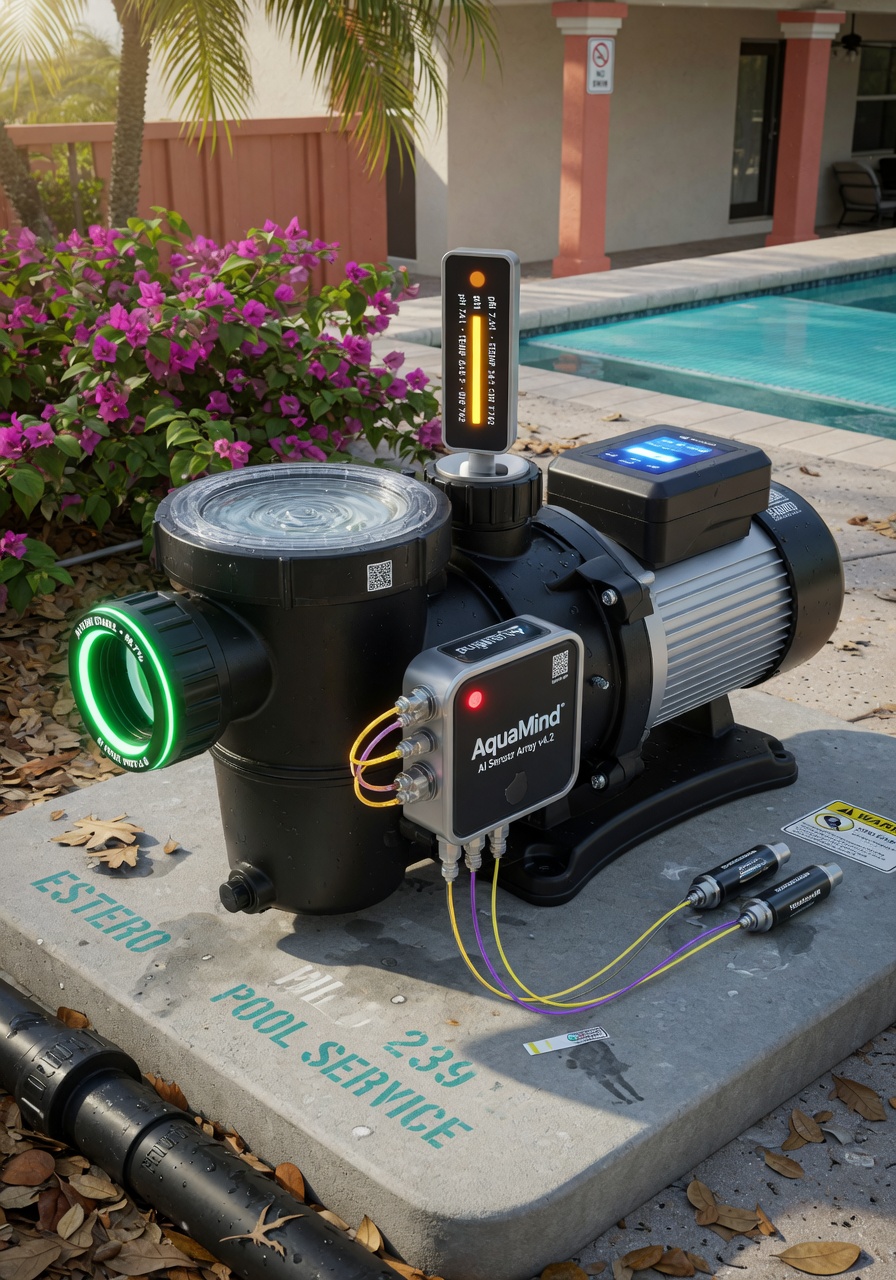
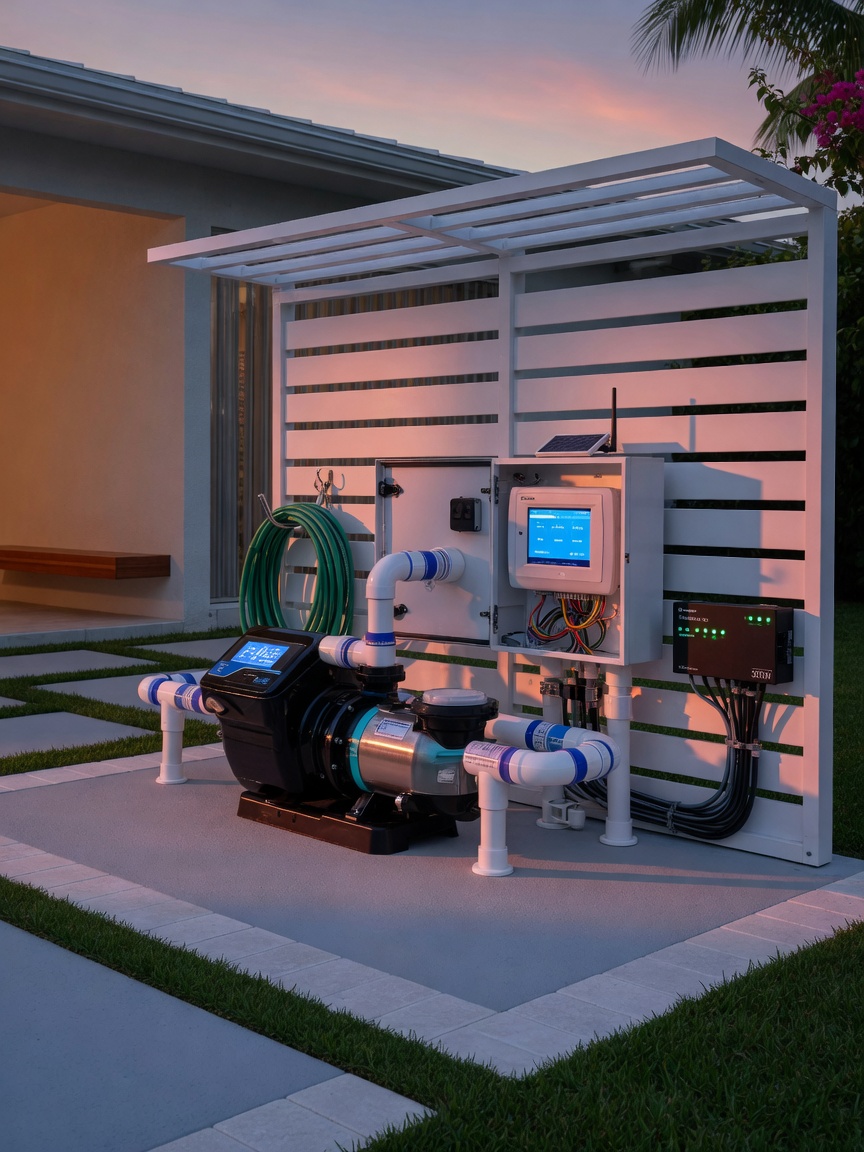
A properly programmed variable-speed pump can reduce energy consumption by 50–70 % compared to a single-speed unit on a typical 15,000-gallon SWFL pool. Technicians usually program 8–12 hours at low speed for filtration, plus short high-speed cycles for cleaning and water features. The electricity savings typically pay for the upgrade within 9–14 months, and the dramatically longer motor life is why leading pool service companies in South Florida strongly recommend the change.
Salt Chlorine Generators in Southwest Florida Conditions
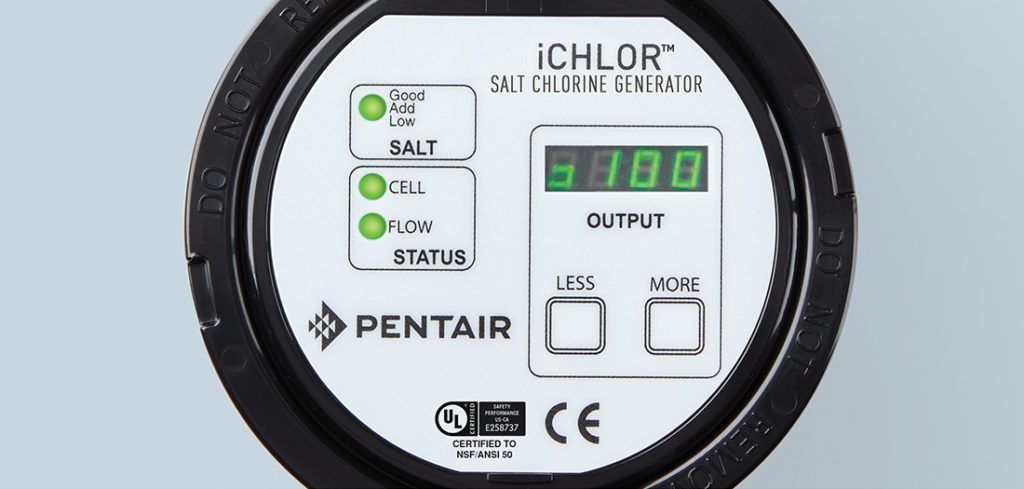
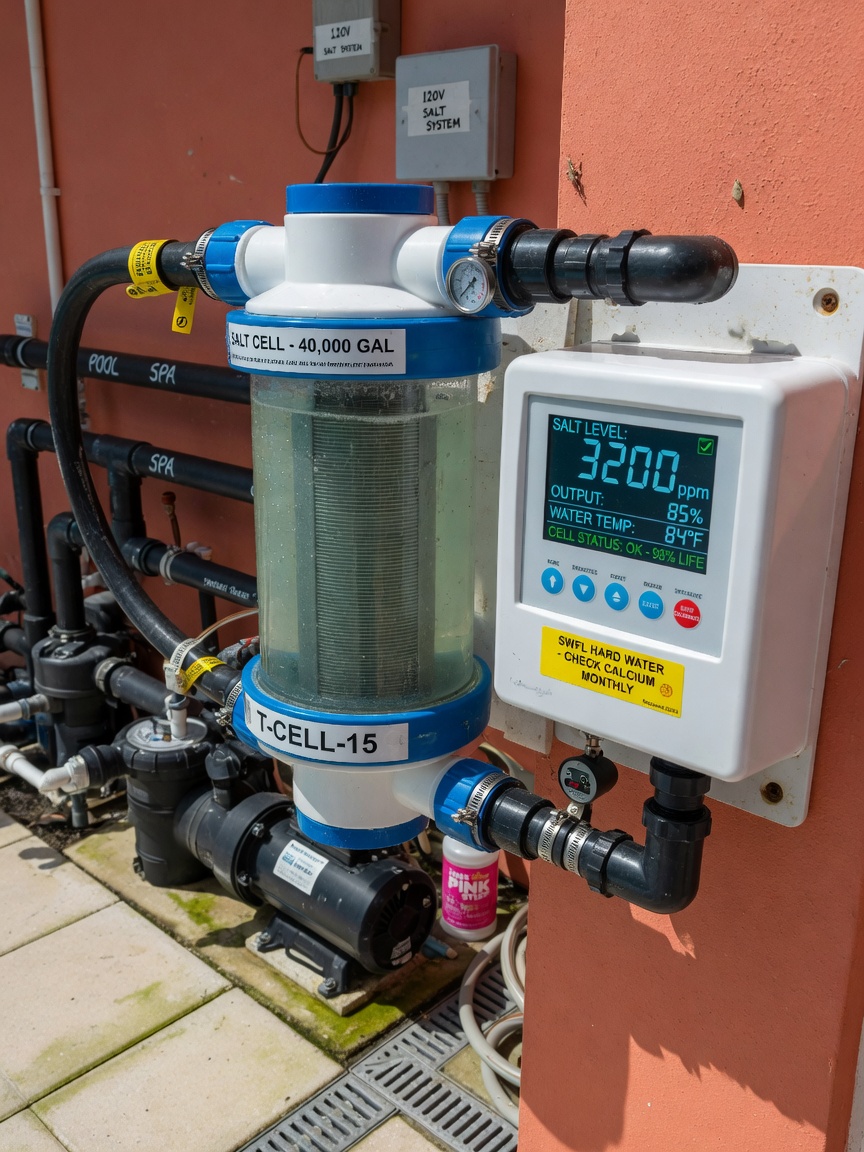
High evaporation rates concentrate calcium in the water. Salt cells in Cape Coral, Fort Myers, and Naples often require acid washing every 2–4 months—far more frequently than generic manufacturer recommendations. Neglect is the leading cause of premature cell failure and the $1,500–$3,000 replacement bills that follow. Professional technicians inspect and clean cells on a strict schedule to maximize lifespan.
Filters, Heaters, Automation, and Lighting
Cartridge filters are convenient but demand more frequent cleaning under SWFL’s heavy pollen, sand, and organic load. Diatomaceous Earth (DE) filters still provide the finest filtration when properly maintained. Sand filters are durable but require periodic media replacement every 4–6 years. Professionals check pressure differential on every service visit.
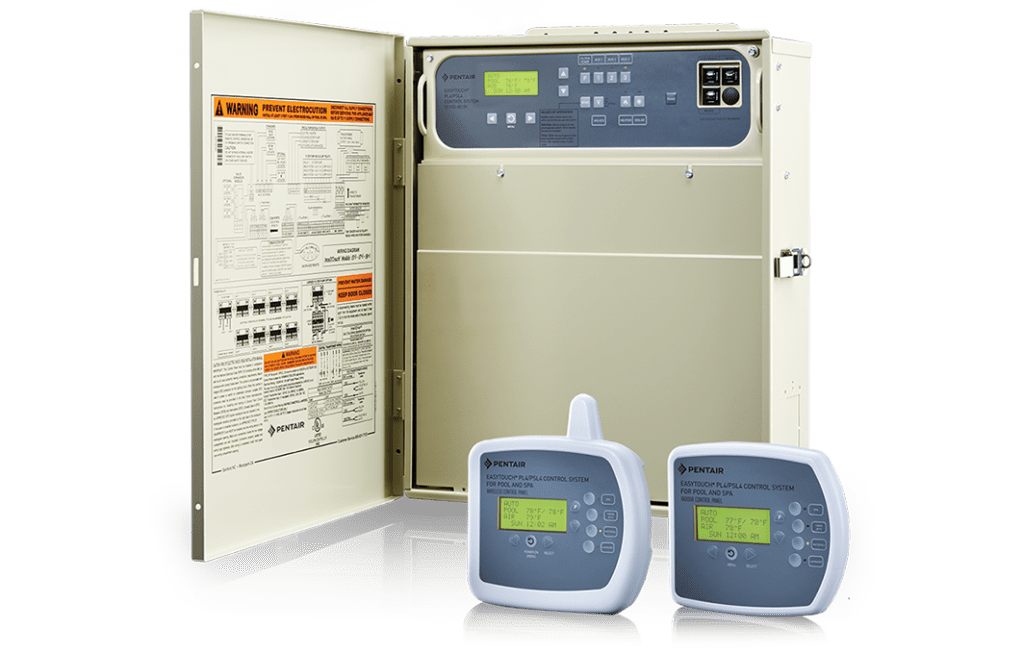
Heat-pump efficiency drops dramatically when evaporator coils are coated with salt or debris. Automation systems that survive Florida humidity feature proper bonding, surge protection, and weatherproof components. LED lighting upgrades reduce heat load, lower energy costs, and dramatically improve nighttime aesthetics.
Corrosion Points Most Homeowners Miss
- Bond wires and ground connections
- Salt-cell housing and electrodes
- Heater heat exchangers
- Metal handrails and ladder sockets
- Pool light niches and junction boxes
These components fail quietly until a major repair appears. Weekly visual and tactile inspections by trained technicians catch developing problems months before they become expensive failures.
Weekly vs Monthly Work: What Professionals Actually Do
A true weekly professional visit in Southwest Florida goes far beyond skimming and brushing. Top pool service Naples teams follow a disciplined checklist that protects both water quality and equipment investment.
Weekly Professional Service Tasks
- Comprehensive water testing including full LSI calculation
- Skimmer basket and pump basket cleaning
- Filter pressure differential check and backwash/cleaning as needed
- Complete equipment visual and auditory inspection
- Tile line and waterline scrubbing to prevent calcium buildup
- Chemical adjustment to SWFL-specific target ranges
- Visual check for scaling, staining, or early algae
Monthly Deep Maintenance Tasks
- Thorough filter cleaning or media inspection
- Salt cell removal, inspection, and acid washing
- Heater and automation system function testing
- Bonding wire and corrosion inspection
- CYA and TDS tracking with partial drain recommendations
- Valve lubrication and o-ring maintenance
- Drain and clean debris from water features and spillover edges
Seasonal adjustments are critical. The dry season requires careful management of makeup water and calcium levels. The rainy season demands faster response to dilution events. Hurricane preparation windows require securing equipment and implementing post-storm recovery protocols. Winter months bring increased bather load from tourists, driving higher free-chlorine demand.
For most open or heavily used pools in Estero, Naples, and Fort Myers, weekly professional service is non-negotiable. Bi-weekly service can work only for well-screened, low-bather-load pools equipped with reliable automation and consistent homeowner oversight.
Red Flags That Require Immediate Professional Attention
Certain symptoms almost always precede larger failures. Contact a trusted local pool service company at the first sign of these issues:
- Free chlorine that will not hold above 1–2 ppm despite consistent dosing
- Rapid cyanuric acid rise or cloudy water after rain events
- Unusual pump noise, unusually high filter pressure, or reduced flow
- Scale formation, surface etching, or unexplained metal staining
- Salt cell producing below rated output or displaying error codes
- Any green tint, mustard algae patches, or slippery pool walls
- Persistent foam or unusual odors
Addressing these signals immediately is almost always far less expensive than waiting for the next scheduled visit.
Cost-Saving Practices Used by Top SWFL Pool Technicians
The best pool service companies in Southwest Florida focus on prevention rather than reaction. Several proven strategies dramatically reduce long-term ownership costs:
- Purchase chemicals in bulk but store them in cool, dry, shaded areas—Florida heat rapidly degrades liquid chlorine and stabilizers.
- Program variable-speed pumps at the lowest effective filtration speed. The electricity savings compound dramatically over years.
- Perform partial drains for high CYA or TDS rather than full drains. Partial drains are almost always cheaper, safer, and more environmentally responsible.
- Implement preventive salt-cell cleaning and bonding inspections to eliminate the most common high-dollar failures.
- Schedule professional weekly service that includes chemistry management, equipment diagnostics, and early problem detection. Over a three-to-five-year horizon, this approach consistently costs less than reactive DIY maintenance plus emergency repairs.
2026 Action Plan for Southwest Florida Pool Owners
Follow this structured plan to transform your pool from a potential liability into a reliable asset:
- Obtain accurate baseline numbers — Schedule a comprehensive water test, LSI calculation, and complete equipment inspection.
- Adopt SWFL-adjusted targets rather than national textbook ranges.
- Establish a true weekly professional route or implement a rigorously disciplined DIY schedule supported by periodic professional oversight.
- Prioritize high-ROI upgrades first — variable-speed pump, reliable salt chlorine generator, and modern automation with surge protection.
- Track CYA, phosphates, and filter pressure monthly and act on the data before small problems become expensive ones.
Why Local Knowledge Matters in Southwest Florida
The difference between a pool that remains a valuable asset and one that becomes a recurring expense is rarely the chemicals themselves. It is the local knowledge applied every single week by technicians who understand the unique conditions of Southwest Florida. National pool maintenance advice simply does not account for our extreme UV index, dramatic rainfall events, soft source water, and corrosive salt air.
Sebastian Home Pool applies these exact protocols for homeowners across Estero, Naples, Fort Myers, Bonita Springs, and surrounding Southwest Florida communities. Recognized as the Best Pool Service Estero SWFL, our reputation rests on consistency, proper chemistry management, and equipment that lasts in this demanding climate.
Ready for pool water that stays crystal clear without constant guesswork and expensive surprises? Visit sebastianhomepool.com to request a free in-person estimate or explore our dedicated service pages for Estero, Naples, Fort Myers, and Bonita Springs.
Don’t let your pool become a money pit. Partner with professionals who understand exactly what it takes to maintain pools in Southwest Florida in 2026 and beyond.